
A sharper logo can make a brand look different. On its own, it won’t clarify why customers should choose you or make your business easier to recognise. For SMEs and startups, effective brand identity development services begin with strategy: defining your position, story and customer promise before translating them into visuals. That foundation matters when your brand needs to work across a website, advertising, packaging and customer communications, then stay coherent as you expand through ecommerce into overseas markets.
A strong identity does more than look attractive. It gives customers a consistent reason to trust your business. This article explains the strategic and visual elements a complete identity should include, how to assess an agency’s process against your business goals and customer needs, and how to build a system that supports growth. We’ll also explore how brand guidelines connect identity to Shopify and marketing touchpoints, so your brand can stay distinctive while adapting to new channels and markets.
Key Takeaways
- Brand identity connects your business strategy to the way customers recognise and experience your brand, extending well beyond a logo.
- Effective brand identity development services move from discovery and positioning to design, guidelines and practical rollout.
- A visual refresh changes how a brand looks; strategy-led identity work also addresses what it stands for and how it shows up consistently.
- Use an audience, positioning, touchpoint and usability check to prepare your identity for ecommerce growth across markets.
- When identity connects with Shopify, conversion optimisation, SEO and GEO, and Klaviyo automation, it can support a more coherent customer journey.
What Do Brand Identity Development Services Actually Include?
Brand identity development translates business strategy into an expression customers can recognise wherever they encounter your business. Effective brand identity development services connect what you offer, who you serve and how you want to grow with the way your brand looks and communicates. The result is more than a collection of design files. It’s a working system that helps build recognition and consistency across your website, ecommerce store, advertising and customer communications.
The concept of corporate identity includes the elements that shape how an organisation presents itself publicly. In practice, a useful identity system links strategic decisions to customer-facing details, so each touchpoint feels like part of the same business.
How Is Brand Identity Different from a Logo Design?
A logo is one recognisable asset within a broader identity system. Typography, colour, imagery, language and layout give it context and help the brand feel consistent across channels. Imagine an online shop whose logo appears on every page, but whose product photography, promotional emails and checkout screens all use different visual styles. The logo is present, yet the overall experience feels disconnected. A coherent identity carries the same character from product discovery through purchase and follow-up.
What Should a Complete Brand Identity System Cover?
A complete system starts with strategic foundations and turns them into practical tools. Its deliverables should reflect business objectives, customer needs and the touchpoints where the brand must work, rather than follow a generic checklist.
- Strategy: positioning, audience, business objectives and intended customer experience.
- Brand story: the purpose, value and messages that explain why the business matters.
- Logo and visual identity: a recognisable mark and a connected approach to imagery and layout.
- Colour and typography: a considered palette and type styles that support clear, consistent communication.
- Usage guidelines: practical direction for applying identity across digital and marketing touchpoints.
A brand identity system is the connected set of strategic and visual elements that helps a business communicate consistently wherever customers encounter it. For a growing ecommerce business, clear guidelines help teams create product pages, campaigns and customer messages that feel aligned, even as the business adds channels or enters new markets.
How Does the Brand Identity Development Process Turn Strategy into Design?
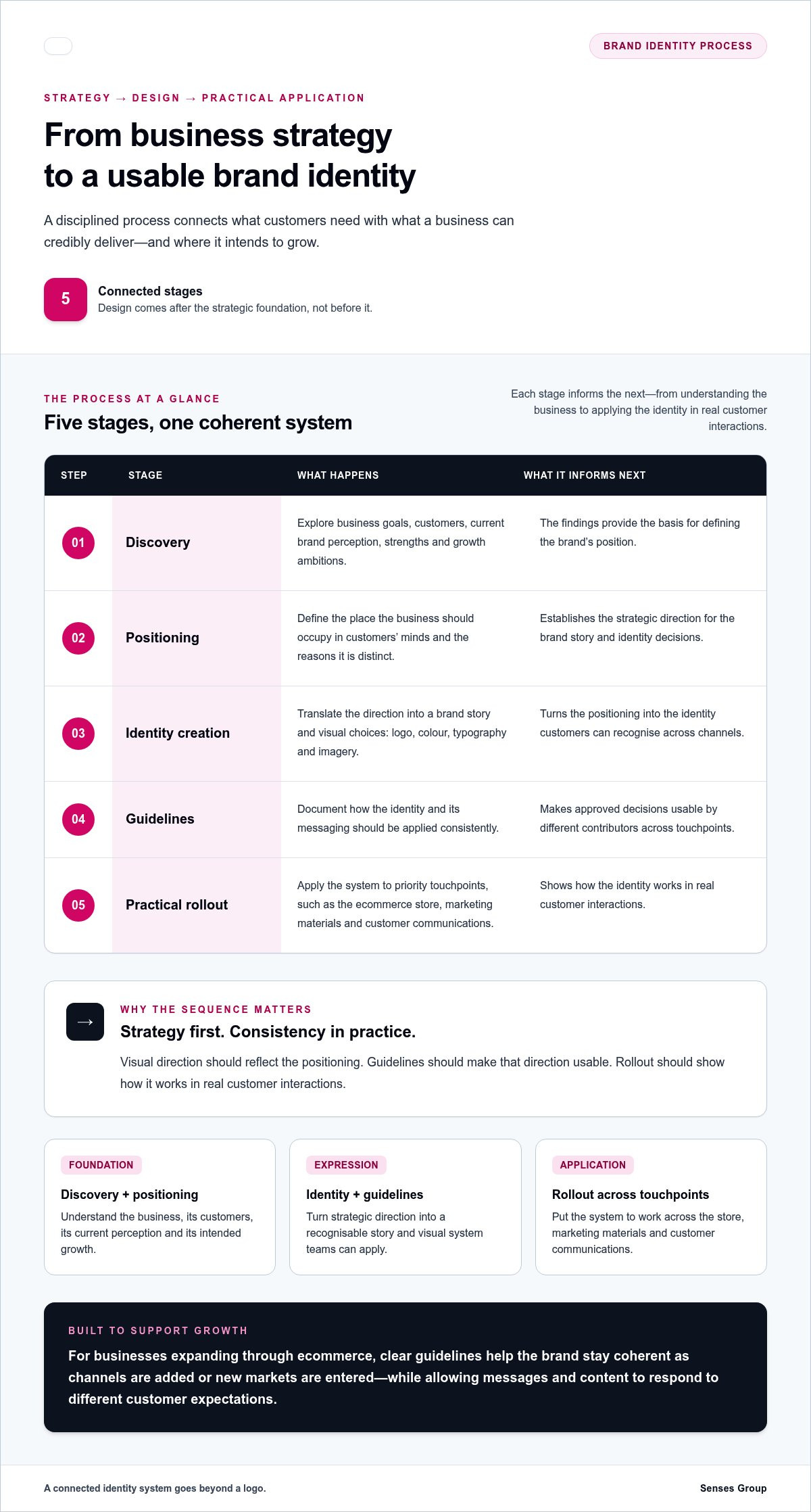
A disciplined process ensures design decisions address the right business problem. For SMEs planning to strengthen recognition or expand through ecommerce, brand identity development services should connect what customers need with what the business can credibly deliver and where it intends to grow. Design comes after that foundation, not before it.
A practical process moves through five connected stages:
- Discovery: Explore business goals, customers, current brand perception, strengths and growth ambitions.
- Positioning: Define the place the business should occupy in customers’ minds and the reasons it is distinct.
- Identity creation: Translate that direction into a brand story and visual choices, including logo, colour, typography and imagery.
- Guidelines: Document how the identity and its messaging should be applied consistently.
- Practical rollout: Apply the system to priority touchpoints, such as the ecommerce store, marketing materials and customer communications.
Each stage informs the next. Visual direction should reflect the positioning, guidelines should make that direction usable, and rollout should show how it works in real customer interactions.
What Happens During Brand Discovery and Positioning?
Discovery examines the business as customers experience it: what it offers, who it serves, what people already perceive and what the company wants to achieve. Positioning turns those findings into a clear basis for the brand story and identity decisions. For an SME preparing to sell overseas, this means establishing what must remain recognisable while considering how messages or content may need to respond to different customer expectations. Coherence doesn’t require every market to be treated identically.
That strategic groundwork helps prevent design choices from relying on personal taste alone. A colour, type style or image approach has a stronger rationale when it supports the brand’s intended position and speaks to its audience.
How Do Brand Guidelines Make Identity Usable?
Guidelines turn approved decisions into directions teams can apply across a website, ecommerce store, marketing materials and customer communications. They can clarify logo use, typography, colour, imagery and tone, helping different contributors create work that feels connected without making every execution identical.
Brand guidelines turn identity decisions into repeatable practice across people, channels and customer touchpoints. That consistency becomes especially valuable as a business adds campaigns or enters new markets. To develop a process grounded in business strategy and practical application, explore Senses Group branding support.
Is Brand Identity Development More Than a Visual Refresh?
A visual refresh can make a brand feel current, but attractive design alone won’t clarify what makes the business distinctive or resolve inconsistent customer experiences. That distinction matters when an SME is deciding where to invest: the right scope depends on the problem, not on an assumption that every business needs a complete rebrand.
Brand identity development services address strategic foundations as well as visual expression. Judge the work by whether it helps the business communicate clearly and apply its identity consistently, not by appearance alone or promises of higher sales.
When Is a Visual Refresh Enough, and When Is Deeper Work Needed?
A refresh may be appropriate when the audience and positioning are clear, but existing assets look dated or no longer suit the quality of the customer experience. Deeper identity work is worth considering when the underlying issue is less clear: messaging changes from channel to channel, customers struggle to understand how your offer differs from alternatives, or the business is preparing to enter new markets.
Use this distinction as a starting point:
| Visual refresh | Strategy-led identity development |
|---|---|
| Updates visual assets while the audience and positioning remain clear. | Addresses unclear positioning, inconsistent messages or new growth ambitions. |
| Focuses on the look and feel of existing materials. | Connects strategic choices to visual identity, language and customer touchpoints. |
| May suit a business that needs a more current expression. | May suit a business that needs a clearer, more usable foundation across channels. |
This isn’t a case for changing everything. If the strategy still fits, preserve it and update what no longer works. If the problem sits beneath the visuals, changing colours or a logo may leave the real issue untouched.
How Can Identity Support Ecommerce Without Becoming Decoration?
On an ecommerce store, identity should help customers make sense of what they’re seeing. Visual hierarchy can give product information a clear order, consistent imagery can make product presentation feel connected, and brand language can carry the same character from a storefront page into a campaign or follow-up message. These choices shape the shopping experience, but they don’t guarantee conversion or revenue.
Shopify design puts those decisions into practice across storefront pages and marketing journeys, helping the brand feel coherent from first impression to post-purchase communication. For more on planning a store around business goals, see the 2026 Strategic Shopify Guide for Hong Kong SMEs.
How Can SMEs Prepare a Brand Identity for Growth Across Markets?
Growth creates more places for customers to encounter your business and more people responsible for expressing it. Before expanding an ecommerce operation into new markets or channels, map the foundations that should travel with the brand and the parts that may need to adapt. A practical readiness review keeps identity decisions connected to customer experience rather than treating consistency as a design-only concern.
Use this framework to assess whether your identity can support the next stage of growth:
- Audience: Can you describe the customers you serve now and the needs of the audiences you plan to reach?
- Positioning: Is it clear what distinguishes your offer and what promise customers can expect?
- Touchpoints: Do your main channels express the same brand, from storefront to post-purchase communication?
- Internal usability: Can staff and partners apply the identity using clear guidelines, without having to interpret the basics from scratch?
These questions help reveal where growth may expose gaps. A brand may feel cohesive in its main storefront but become harder to recognise across social content, email and advertising if each channel is developed separately. The aim isn’t to make every execution identical; it’s to make each one recognisably part of the same business.
Which Brand Touchpoints Should an SME Map First?
Start with customer interactions that help people discover, assess and buy your offer. Map the storefront, product pages, social content and email. Note the visual style, key messages and expectations each interaction creates. For example, if an advertisement sets one expectation but the product page describes a different value proposition, the disconnect can weaken the customer journey.
Include post-visit messages in the map, too. An abandoned-cart email should feel like a natural continuation of the store experience. The Klaviyo abandoned cart strategy article can help inform that specific part of the journey.
For a broader perspective on how identity works across retail touchpoints, explore Mastering Retail Brand Identity: 2026 Digital Guide.
How Can a Brand Stay Coherent as the Business Expands?
Keep the foundations stable: core story, positioning, identity rules and customer promise. Adapt the content and channel execution to suit customer context, rather than changing the brand’s underlying meaning each time it enters a new market. This gives a business room to communicate with relevance while preserving recognition.
Run a simple usability test: can staff and partners use the guidelines to create a product page, social post and customer email that feel aligned without needing repeated interpretation? If not, strengthen the guidance before adding more touchpoints. To build an identity system around your growth plans, explore brand identity development services.
How Does Senses Group Connect Brand Identity to a Growth System?
Identity creates greater commercial value when it guides more than visual design. Senses Group connects brand strategy and identity with the ecommerce and marketing touchpoints where customers encounter a business, helping SMEs build a more coherent experience as they grow. The aim is to give each channel a shared foundation, rather than treating every marketing activity as a separate expression of the brand.
How Does Senses Group Build Beyond the Visual Identity?
Senses Group’s brand identity development services bring together strategy, story, logo, colours, typography, a visual identity system and guidelines. These foundations can inform a Shopify storefront, from the way products are presented to the hierarchy of information and the consistency of the shopping journey. Conversion optimisation can help assess how that experience serves customer needs, while SEO and GEO, advertising, and Klaviyo automation can carry the brand’s language and visual direction into discovery, campaigns and customer communications.
This connection matters because customers don’t experience a brand in isolated pieces. They may first encounter an advert, browse a store and later receive an email. A shared identity helps those interactions feel like parts of one considered journey. For a broader look at digital growth planning, read the Integrated Digital Marketing: Scaling Guide for 2026.
What Evidence Shows Identity Can Work Within a Wider Business System?
Different organisations need identity systems suited to their business context. Jardine Shipping Services engaged Senses Group for brand guidelines and marketing materials as part of a corporate marketing overhaul, illustrating how identity can support consistent communication beyond consumer ecommerce.
For Monchhichi Jewelry Atelier, Senses Group combined brand strategy and identity with an ecommerce rebuild and digital marketing work. Revenue doubled shortly after launch. That result followed an integrated programme, so it shouldn’t be attributed to identity alone or treated as a promised outcome. The broader lesson is that strategic foundations, a usable digital experience and coordinated marketing can work together as a business system.
If your brand needs a clearer foundation for ecommerce and future growth, explore a tailored brand identity engagement with Senses Group. A connected approach can align strategy, expression and customer touchpoints around your business objectives.
Build a Brand Foundation for What Comes Next
A scalable brand is built on more than a distinctive look. It connects clear positioning with a practical identity system, then carries that system across ecommerce, marketing and customer communications. The right scope depends on your business: a visual refresh may be enough when the strategy is clear, while expansion or inconsistent messaging may call for deeper brand identity development services.
Senses Group, founded in 2008, reports more than 18 years of expertise as of 2026. Its brand identity work can encompass strategy, story, logo, colours, typography, visual systems and guidelines. For Monchhichi Jewelry Atelier, an integrated ecommerce rebuild combining brand strategy and identity with digital and marketing work was followed by doubled revenue shortly after launch. That result reflects the broader programme, not identity alone, and isn’t a guaranteed outcome.
Give your next stage of growth a stronger foundation. Build a brand identity designed to support your growth with Senses Group, and move forward with a more coherent brand experience across the markets and channels ahead.
Frequently Asked Questions
What do brand identity development services include?
Brand identity development services connect business strategy to the way customers recognise and experience a brand. They can include positioning, brand story, logo, colours, typography, a visual identity system and usage guidelines. The precise scope should reflect your business objectives and customer touchpoints. For an SME selling online, that could mean aligning the storefront, product pages, advertising and customer emails around a clear, consistent brand expression.
How is brand identity development different from logo design?
Logo design creates one identifying asset; brand identity development establishes the wider system in which that asset works. It considers how typography, colour, imagery, layout and language combine across customer interactions. A logo may appear on an online store, but if product pages, social posts and emails use unrelated styles or messages, the experience can feel fragmented. A coherent identity gives these touchpoints shared direction while allowing each format to serve its purpose.
How long does brand identity development take?
The timeline depends on the project’s scope, the number of decisions involved and how many customer touchpoints need identity guidance. Strategic discovery and positioning come before visual development, followed by review, guidelines and practical application. A focused visual update may require a different process from a system designed for ecommerce and market expansion. Define the required outcomes and key review stages at the outset so the work has a clear sequence and decision-makers can plan their input.
Can a small business develop a brand identity before expanding overseas?
Yes. Establishing the brand foundation before expansion can help a small business communicate consistently as it reaches new customers through ecommerce. Clarify the audience, positioning, core story, customer promise and identity guidelines first. Then consider which content should adapt to each market or channel while the underlying brand remains recognisable. This approach gives a business a stable starting point for overseas growth without assuming customers in every market have identical needs.
Does a brand identity redesign improve ecommerce conversions?
A redesign alone can’t guarantee higher ecommerce conversions. A clear identity can inform product presentation, visual hierarchy and brand language, helping customers understand the offer and encounter a more coherent experience across storefront pages and marketing communications. Conversion outcomes also depend on the wider customer journey and how the store serves customer needs. Treat identity as a foundation for a considered ecommerce experience, then assess performance rather than assuming new visuals will produce a particular result.
How do I know whether my business needs a rebrand or a visual refresh?
Choose a visual refresh when your positioning and audience are clear but existing assets look dated or no longer fit the business. Consider deeper brand work when messaging is inconsistent, customers don’t understand what distinguishes your offer, or expansion plans expose gaps across channels. Not every business needs a full rebrand. Identify the root problem first, then update only what needs to change while preserving strategic foundations that still serve your customers and growth plans.